Historias Sin Fronteras

EL SALVADOR

Mangrove Honey: Salvadoran Fishermen Bet on Making a Living from Restoration


After more than two decades restoring the Barra de Santiago mangroves, communities along El Salvador's Pacific Coast found that beekeeping was a solution to strengthening their economy. Today, climate change and the end of international cooperation are testing the continuity of a model that seeks to prove that conservation can also improve livelihoods.


By: Jorge Rodríguez

Raccoons, iguanas, crabs and even crocodiles. Incredible as it may seem, these are not the most exotic footprints in the mangrove forest along El Salvador's Pacific Coast. No, that honor belongs to the rubber boots of local fishermen searching for crabs in the mud. “We use these traps to catch blue crabs,” says Carlos Martínez as he leans down to check if any have been caught.

Since the beginning of the 21st century, the communities of Barra de Santiago have carried out voluntary community work to restore the mangroves. Before that, Martínez recalls, cutting of the mangrove forest, agricultural expansion and the accumulation of sediment and debris upstream were the norm. “We didn’t know what a degraded mangrove meant for our lives,” he says. But the communities’ efforts helped reverse that situation and, over time, cutting was considerably reduced, crab populations began to recover and people started protecting species such as parrots, crocodiles and caimans.
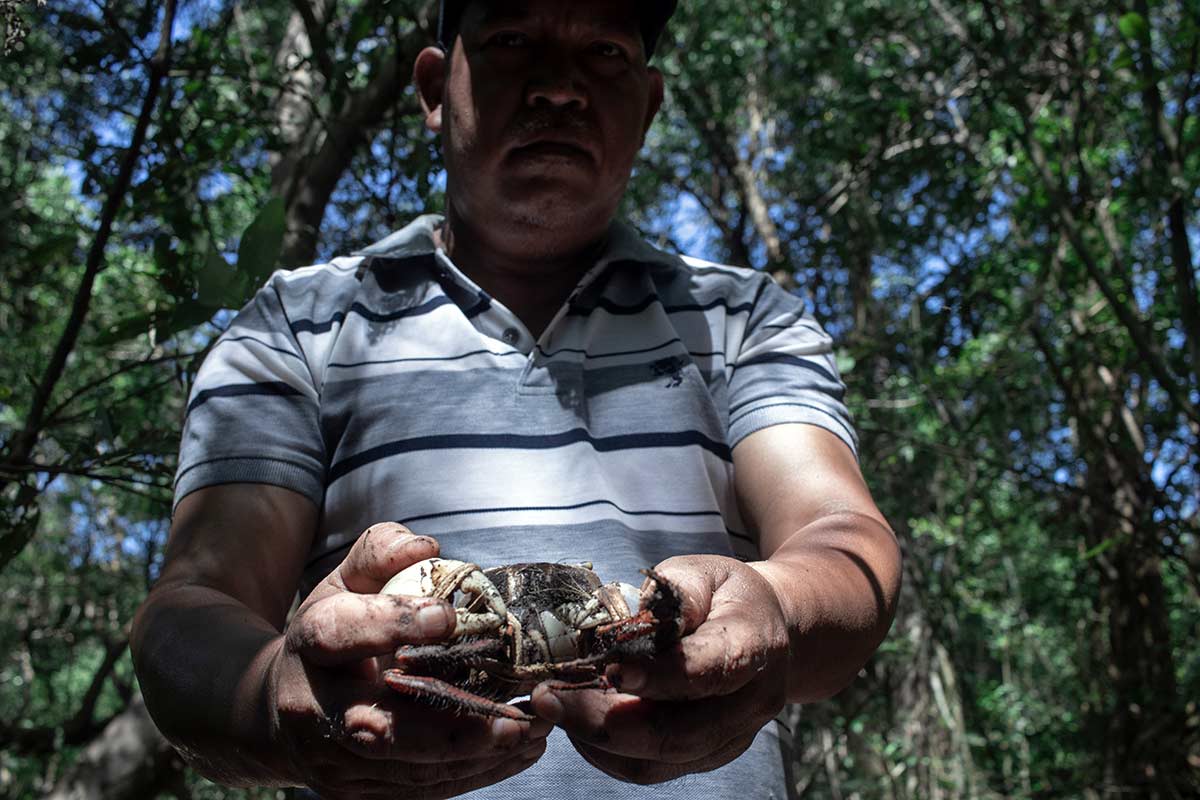
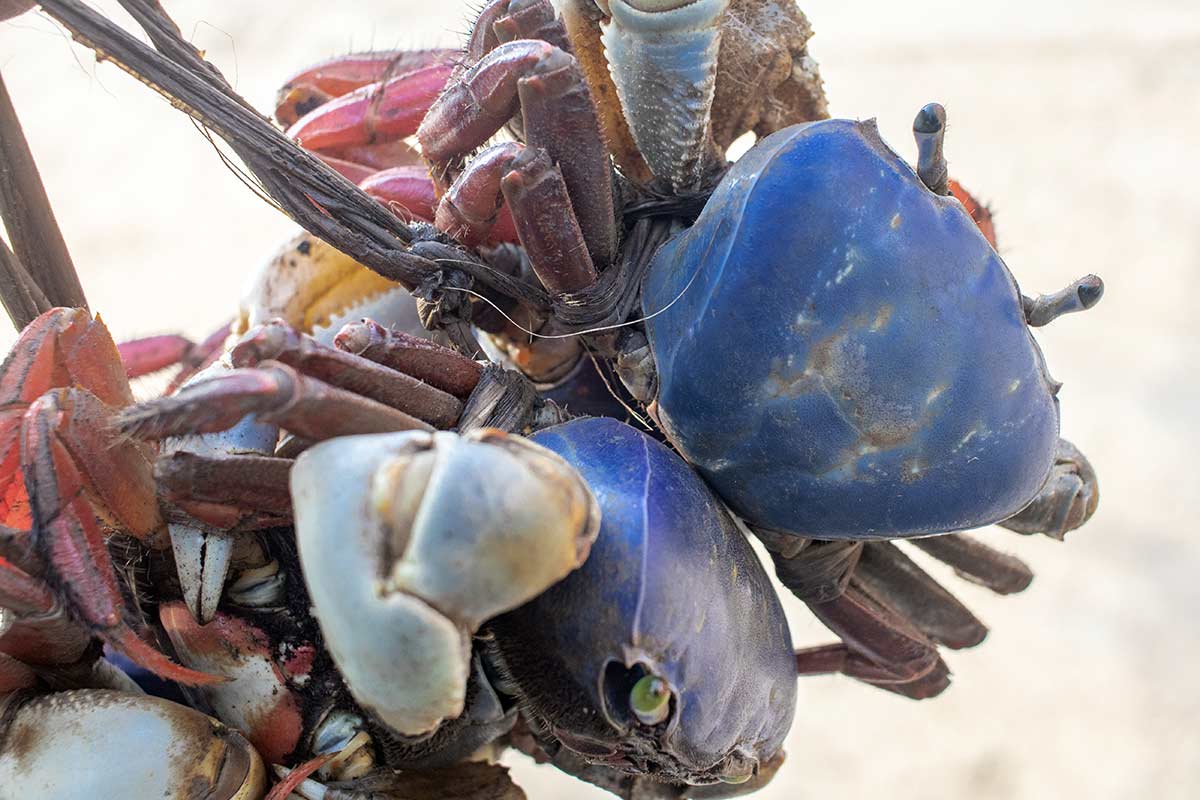
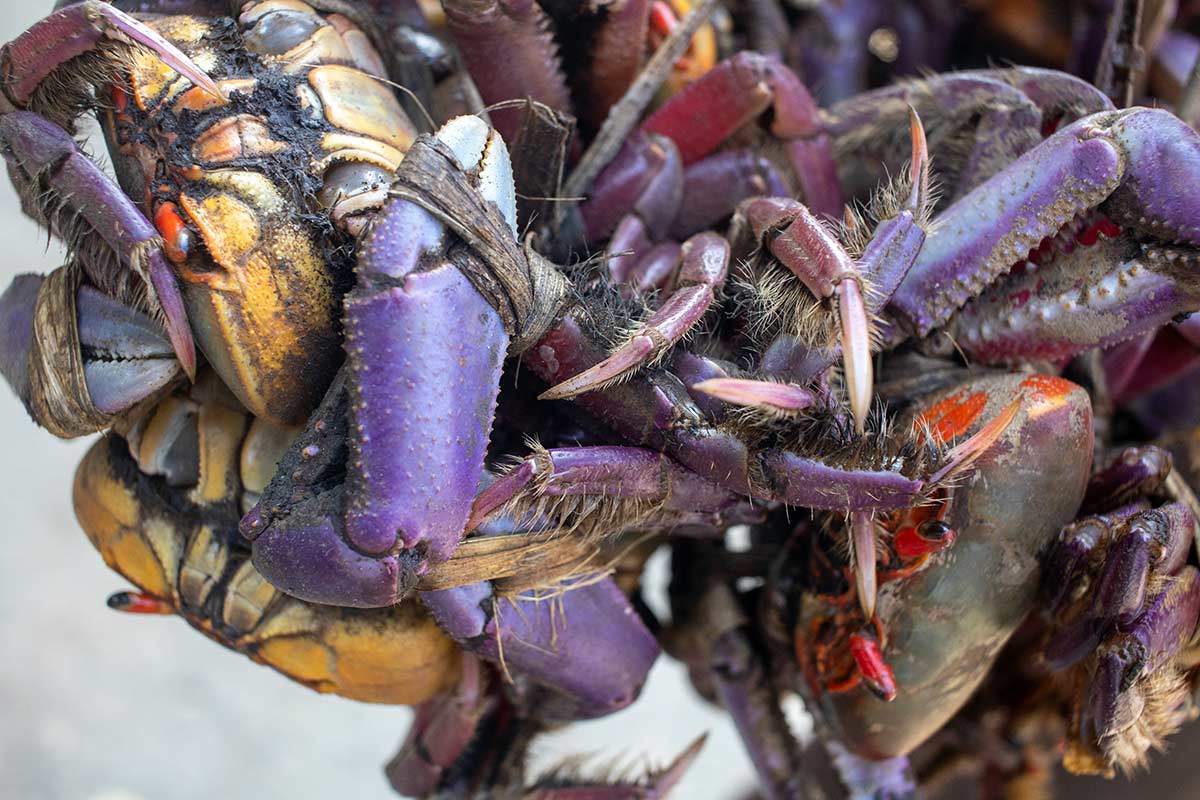
Fishing for the punche crab (Ucides occidentalis) and the blue land crab (Cardisoma crassum) is vital for the livelihood of Barra de Santiago communities. Community initiatives backed by national and international institutions have established a culture of sustainable consumption.
Photos: Jorge Rodríguez.

However, ecological recovery did not solve the other great challenge for these communities. “The mangrove products weren’t yielding the economic results we expected,” says William Recinos, another local fisherman. Restoring the mangroves had been possible. Living off them was another story.

The search for alternatives aligned with the arrival of several projects in 2017, driven by local and international organizations that promoted sustainable activities within the mangrove. One of the options was uncommon in Central American mangroves: honey production. No one in the community thought of it as a productive alternative. “We had no connection to bees and nobody believed it would work,” says Recinos.

Despite their initial doubts, the fishermen accepted the challenge. Seven communities, including El Mango—to which Martínez and Recinos belong—participated in a beekeeping pilot project. Recinos received technical training at the National School of Agriculture and 30 hives were distributed among the communities. Each group received five hives and the necessary equipment to start production. But the uncertainty continued. “[After receiving the certification] I came back without believing in the bees,” confesses the now-beekeeper.

The distrust was not unfounded. For decades, the families of Barra de Santiago had lived on fishing, subsistence agriculture and construction. Bees were never a part of their daily lives. However, the years of work restoring the mangroves—gathering red mangrove seedlings, planting trees and walking through the mangrove—allowed them to observe something that had previously gone unnoticed.

“We realized the mangrove was rich in flowering,” Recinos says.

The pilot was strengthened by the arrival of the Regional Coastal Biodiversity Project, led by the International Union for Conservation of Nature (IUCN), which increased the number of hives and benefited 32 families in the region. At first, the learning was technical: how to maintain the hives, control pests and handle them to extract honey.

By 2020, they had already produced two harvests, producing about 140 quarts of honey. El Mango grew to have more than 80 hives, which produced up to 300 quart-size bottles per season. Bees became a part of daily life.

With international funding, the model was successful. But when the funding started to decrease, significant cracks began to appear. “Beekeeping supplies are very expensive,” Martínez notes. Although the income from the sale of honey contributed to improving household income, production costs exceeded profits.

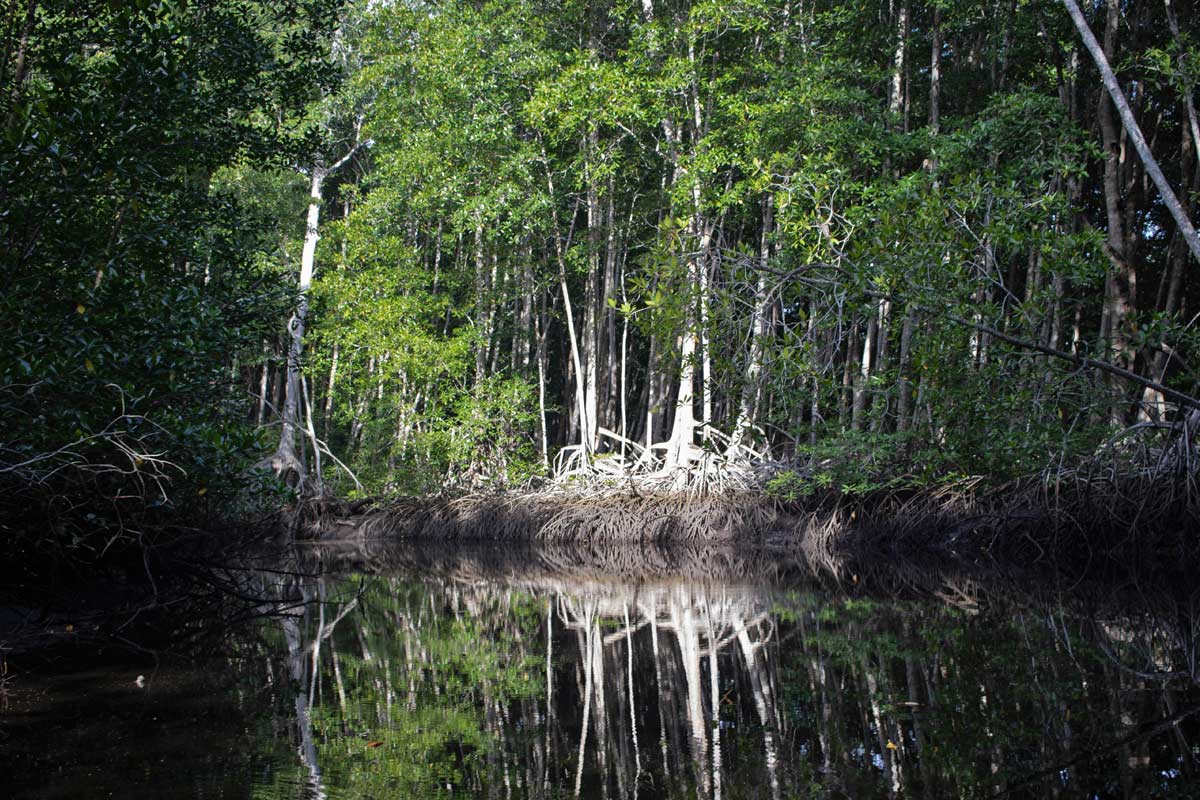
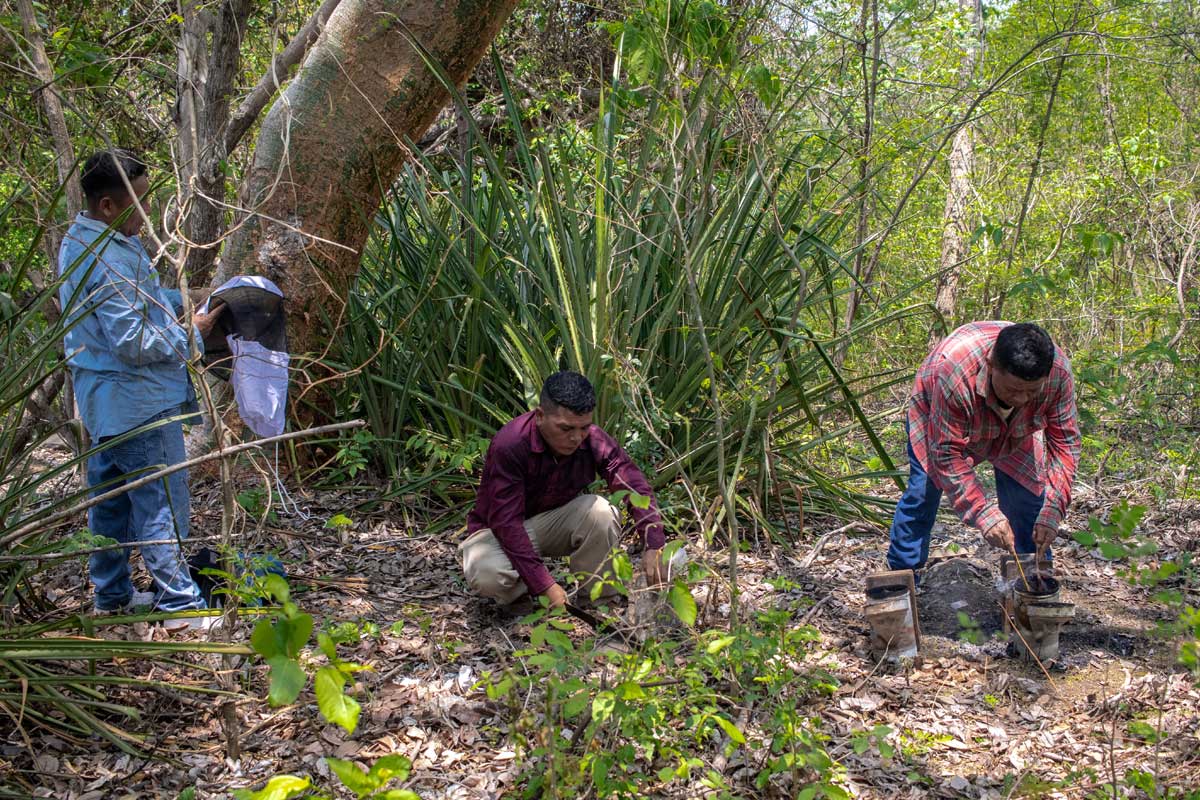
The Barra de Santiago Complex is a vital wetland for El Salvador's biodiversity. Its more than 28,000 acres were declared a Protected Natural Area in 2006.
Photo: Jorge Rodríguez.

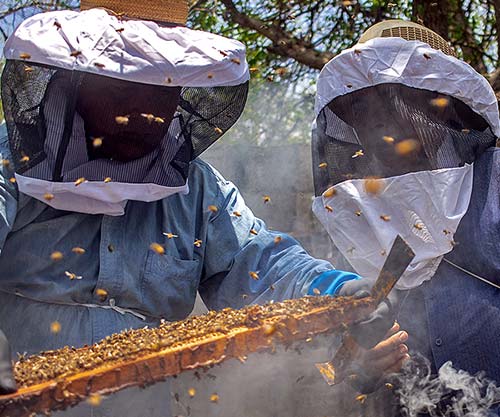
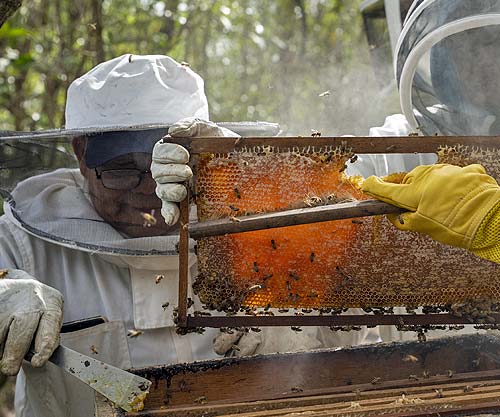
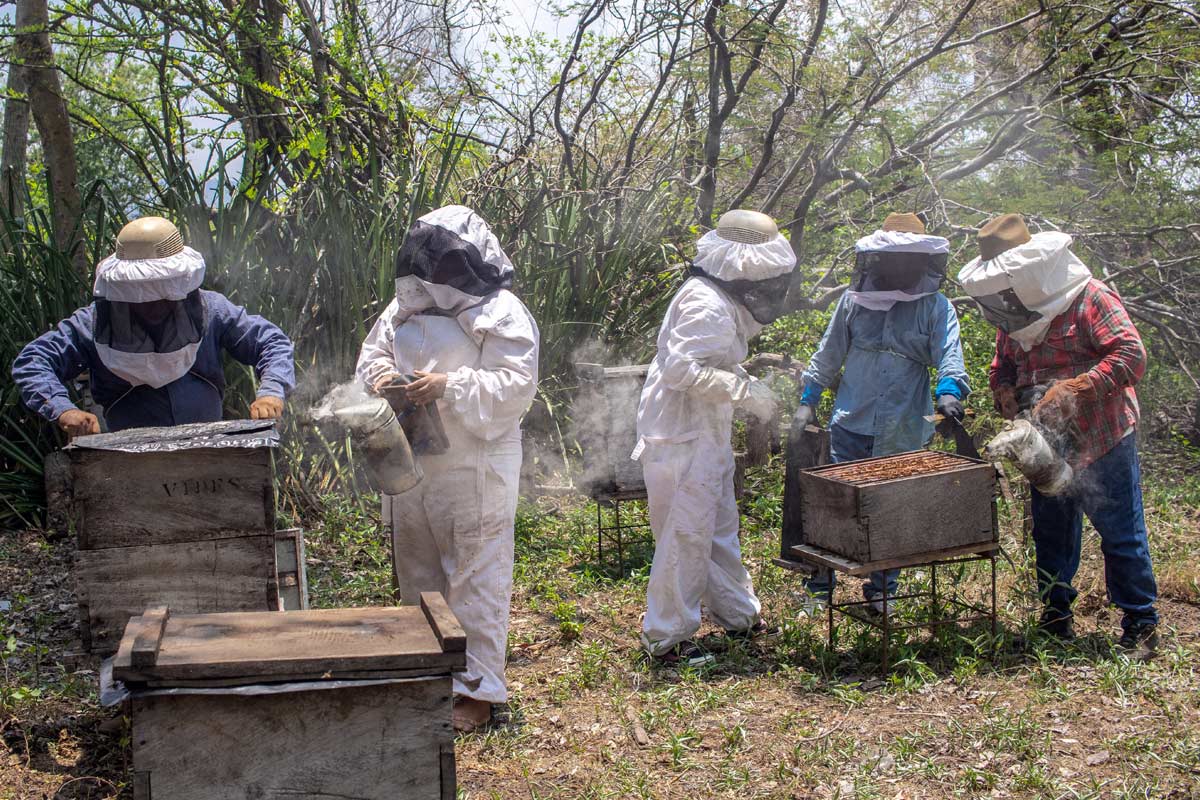
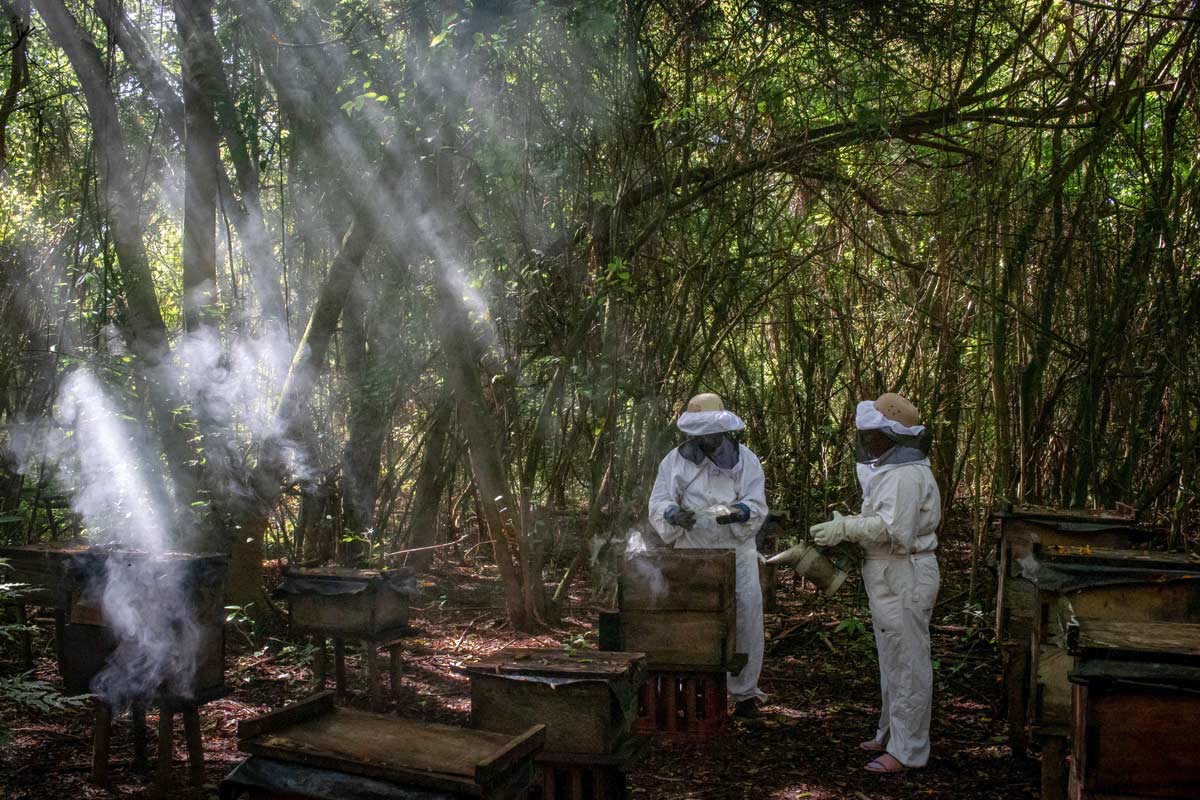
During the harvest, William Recinos's group heads to the apiary to collect honey and other beehive products before straining and bottling them at a member's house.
Photo: Jorge Rodríguez

Photo: Jorge Rodríguez


Mangrove Restoration

William, his brother Armando, and beekeeping team members Daniel and Blanca, walk to their apiary in the Guayapa canton, an area of mangroves where they first began working years ago. They load boxes, check the equipment and get ready to inspect the hives.

As they prepare the smokers, it is obvious that there are not enough protective suits for everyone. “The trick is not to fear them, because if you do, they’ll sting you,” Armando says as he pulls down his shirt sleeves and puts on a protective helmet.

The El Mango group has had to expand their work beyond the mangrove. Recent climate conditions and the withdrawal of some technical support forced them to adjust their strategy.

They no longer walk through the mud. Instead, they head uphill, leaving the dense mangrove trees behind. The path gives way to willows, almond trees and fruit trees. The sun feels stronger than in the mangroves. During the walk, the Recinos brothers describe how the heavy rains that fell early in the year impacted their beekeeping activity. They went from having 80 hives to only 43.

The loss adds to a long list that has become more evident since the late 1990s. When Hurricane Mitch hit Central America, some regions of El Salvador received the equivalent of four months of rain in a single climate event. Rivers overflowed and debris caused the hydrological connectivity to the mangrove to collapse.

Then, a group of 36 women organized under the name Women's Association of Barra de Santiago (AMBAS) with the sole purpose of restoring the health of the mangroves. According to Rosa Aguilar, one of the founders, the decision to group together allowed them to focus on eradicating mangrove cutting and on legitimizing the group through the creation of the current Local Sustainable Use Plans (PLAS).

AMBAS served, in a way, as a pilot for the implementation of investment mechanisms for the development of Barra de Santiago. In 2006, the group became co-managers of the Barra de Santiago and Metalio mangrove, years before the mangrove was declared a Ramsar site establishing the area as a wetland of international importance. “We have a five-year agreement as co-managers of the area, and now they cannot come and interfere with it. We aspire for it to become a sanctuary,” Aguilar asserts.

These actions, funded by the European Union, extended to the seven communities of Barra de Santiago, including El Mango. It was then that the local committees were born, giving them access to technical and financial resources to restore the mangrove and recover the populations of blue crab and punche crab, two species of great importance for the subsistence of the region. Initially, AMBAS managed to restore 20 acres of the mangrove. They have now raised that figure to 30.

That was achieved through everyone's participation. Each community organized to perform different tasks according to their geographic location. Some clear the channels to prevent obstacles and siltation. Other groups collect solid waste from the rivers.

“But unfortunately, projects only last five years,” Recinos points out. Without institutional support, they understood that local development committees were not enough to protect the mangrove. They organized once again and formed the ProBosque community association. “We are well-structured now,” he says.

EL SALVADOR / Pictures


El Salvador El Salvador El Salvador El Salvador El Salvador

Relentless Work

Harvesting honey is a team effort. While Blanca smokes the apiary, William, Armando and Daniel check the boxes and collect the honeycombs that are ready to be harvested. “Then we choose the house of one of the members to strain and bottle the honey. We don't have a permanent headquarters,” Recinos says.

The end of international funding had an immediate impact on Barra de Santiago. Of the seven community committees, only El Mango remains active, though with a significant drop in membership. “There used to be many of us and now there are few,” Armando laments. The group went from 15 members to just five.

All of this triggered a chain reaction. They had to move the apiary away from the mangrove, so they had to shift their production to a more traditional type of honey. In addition, the loss of half the hives caused a significant drop in profit margins per bottle. According to Recinos, it costs them $12.50 to produce a single quart of honey, yet they sell it for barely $6.

But the adversities are not enough to push them to abandon the project, because, as Armando reminds us, they will never stop fighting to protect the mangrove. “What we need are public policies that support our communities. The government has focused on security, but has neglected other areas.” The numbers support this. Since 2021, the Ministry of Environment has seen its budget cut for four consecutive years.

But they are determined to continue. On one hand, they have ventured into innovating with honey-based products: soaps, balms and curcumiel, a mixture of honey and turmeric for medicinal use. They also created their own Facebook page to post about activities in the apiaries—all while maintaining their ongoing care for the mangroves.

After checking the hives—“it will still be a few weeks before the harvest can take place,” the group says—they prepare to carry out the other activity essential for all of this to work: managing the river basin. “This weekend we are going to build a retaining wall. We buy the sacks and the fuel and we use our own transportation. We are going to invest about $800 in materials, plus labor,” Recinos says.

Their persistence is based on more than just environmental awareness. In 2019, they submitted a request to the Ministry of Environment for the co-management of the Barra de Santiago and Metalio mangrove, and although the co-management remains exclusively the responsibility of AMBAS, the request is still valid. In addition, the ProBosque association was part of another project funded by the European Union, aimed at strengthening their production processes to guarantee food security in Barra de Santiago.

Furthermore, it has allowed the group to create an intimate relationship with the bees and now they consider them their best allies to generate income for their families. “I used to be very afraid of them, but now I know they are not aggressive. I now understand the work of the queen and the workers. Beekeeping is also an activity in which we women can participate,” Blanca points out.

As they pack away their equipment, suits and smokers, Recinos and the El Mango group have their sights set on recovering the lost hives and returning to the mangroves to produce this unique honey. “Just like the bees, we rely on each other's work to move forward. We keep at it,” he says.

The associations

El Salvador
EL SALVADOR

Mangrove Honey: Salvadoran Fishermen Bet on Making a Living from Restoration


Costa Rica
COSTA RICA

Puntarenas Mangrove Rewards Ecological Restoration with Honey