In the Estero de Puntarenas Wetland, where the fresh water from the rivers meets the salinity of the sea, a persistent murmur rose from the mangroves near the community of El Establo. It was not the sound of voices, but the buzzing of hundreds of bees.
“Run!”
The workers set aside their shovels, pulled their boots out of the mud and rushed away from the site, alerting other colleagues along the way who were also digging channels in the mud to allow the entry of the tide, and with it, the arrival of mangrove seedlings.
While they waited for the swarm to calm down to resume their tasks, a biologist from the National System of Conservation Areas approached Jesús López with a question that sounded like a business plan: “Why not take advantage of the bees here?”
That question, although casual, not only laid the foundation for ApiMangle but also established a line of defense for a wetland threatened by fire and neglect. It allowed the seven members of the project to dream of multiplying hives. But it has not been easy. They must still resolve how to build a self-sustaining business model before external funding runs out and the threat of vandalism ends up reducing their source of income to ashes.
Right there lies the spark that ignites El Establo’s persistence. The story of ApiMangle – an innovative community-based ecotourism and beekeeping project – reflects the tenacity of those who, after years of working land that was not their own, decided to turn their deep knowledge of the territory into a tool for their own protection. To understand how a group of sugarcane workers ended up becoming guardians of the ecosystem, it is necessary to look back at the path López and his colleagues traveled long before the buzzing of the bees set their course.
López arrived in El Establo in 1978, drawn by work in the sugarcane harvest. He worked for the El Palmar sugar mill until his retirement and then learned enough about beekeeping to co-found ApiMangle alongside Andrea Sánchez.
The project began with 20 people in 2022, but they gradually left until only seven remained, ranging from young adults and women to seniors. This group is now in charge of hive care, honey extraction and bottling.
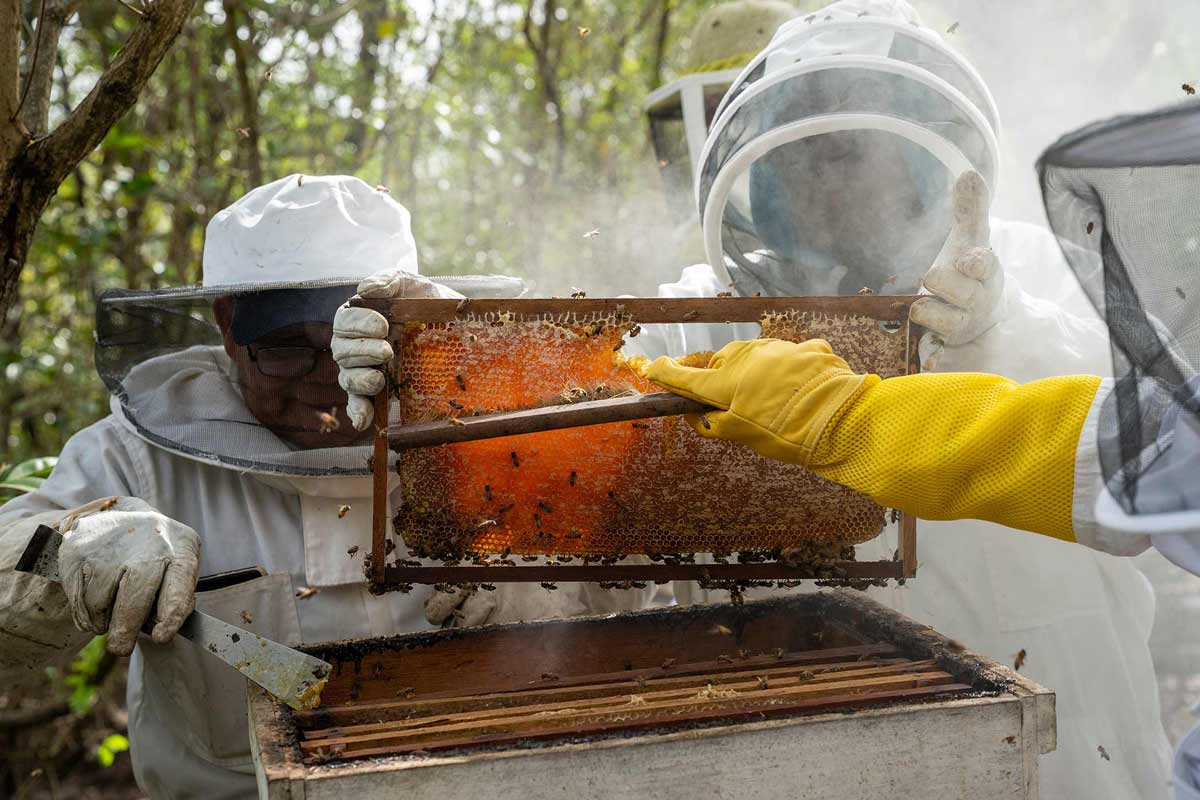
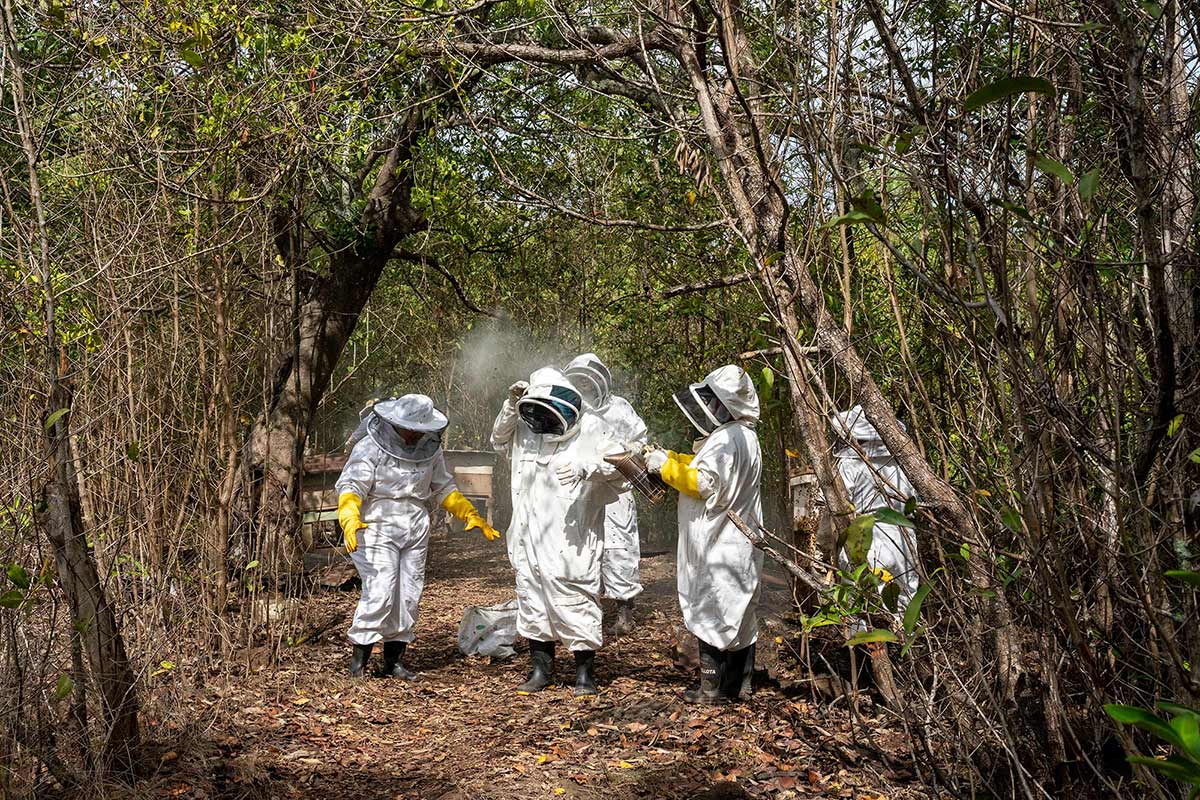
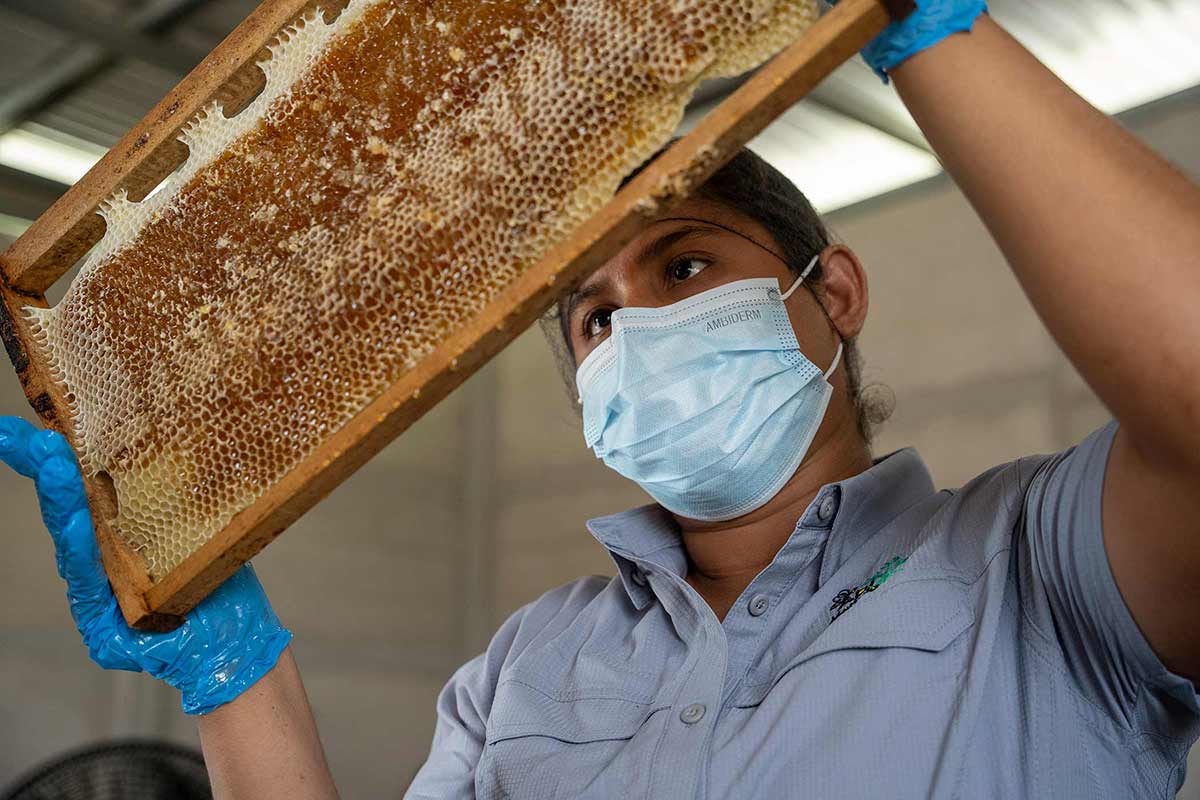
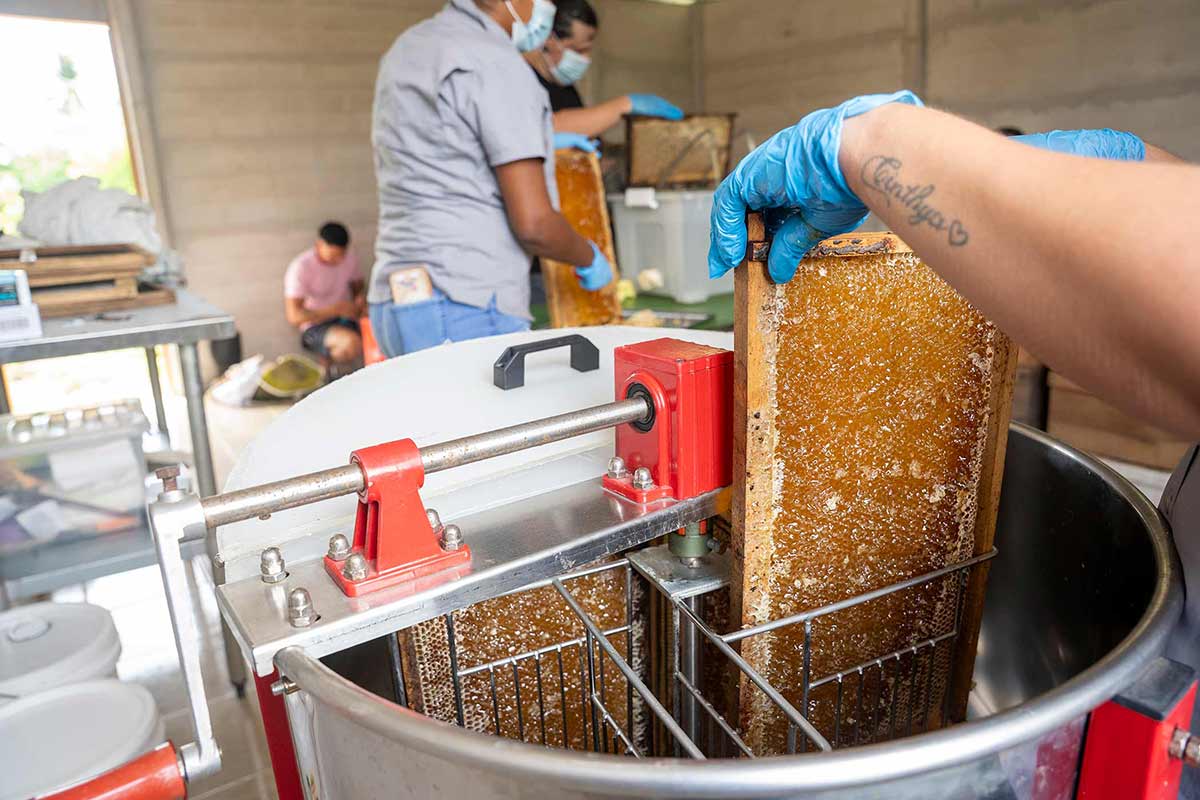
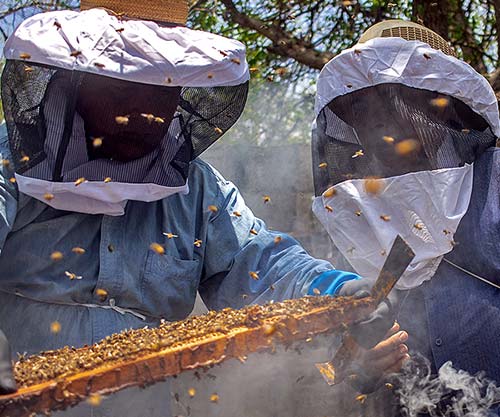
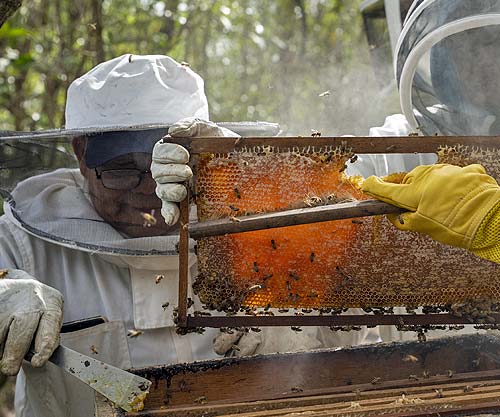
During the week, everyone works, either at home or away, and some also study. Sundays, however, are dedicated to the bees. The workday begins at six in the morning. Wearing protective suits, they enter the mangrove to check the hives and remove the honeycombs, placing them in boxes to be transported to the extraction room about 330 feet up the dirt road. Once inside the extraction room, they swap their protective suits for gloves, face masks and hairnets. The wax is removed from the combs before they are placed in a centrifuge to facilitate extraction. The empty combs are then boxed up to be returned to the mangrove, while the honey is filtered and bottled. The entire process wraps up around three in the afternoon.
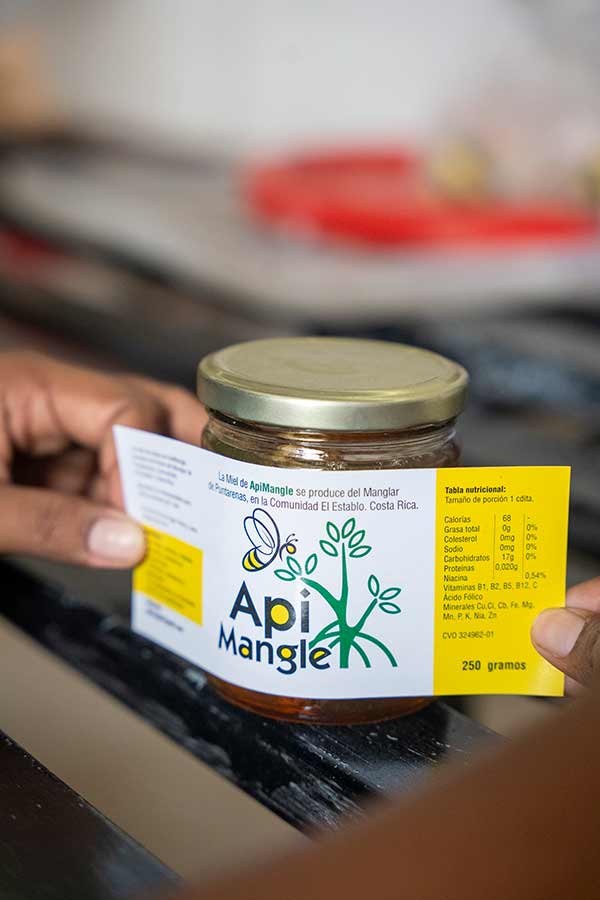
Since its founding in 2022, ApiMangle has prioritized the training and professionalization of its members. The team has completed training on beekeeping, food handling and first aid, in addition to building capacity in cooperative structures, accounting, business plan design and marketing. This capacity-building process has received technical support from the Corcovado Foundation (2022) and, subsequently, the MarViva Foundation (2023–2026). Currently, the project is moving toward obtaining a Veterinary Operating Certificate (CVO), which is expected this year.
Four years in, ApiMangle now sells pure honey and blends infused with chili, ginger and eucalyptus. Analyses by the Tropical Beekeeping Research Center of the National University of Costa Rica (CINAT-UNA) revealed that this honey contains 30% pollen from mangrove species, making it polyfloral. It is as diverse as the environment from which it originates.
Luis Sánchez, a researcher at CINAT-UNA, highlighted that mangrove honey has a unique chemical composition shaped precisely by this ecosystem. By collecting naturally brackish nectar, the bees produce a honey with a much higher mineral concentration than inland honeys, making it remarkably rich in micronutrients and trace elements beneficial to health.
But ApiMangle does not want to just sell honey. Tourism is one of the diversification alternatives the association is venturing into. Guided tours are offered to students and tourists so they can see the hives, learn about mangrove restoration and ecosystem services, and sample the honey for purchase. Andrea Sánchez, co-founder and president of ApiMangle, is a barista by profession and developed a gourmet coffee service that includes tastings and homemade pastries during the educational tours.
For the hives to thrive and for the project to scale, the bees (Apis mellifera) need constant tidal flows to keep the mangrove forest blooming. This extends up to 3.1 miles, a distance that marks the maximum travel distance the insects make in search of brackish nectar.
Exactly 1.8 miles away lies the sector of the mangrove that López helped restore.
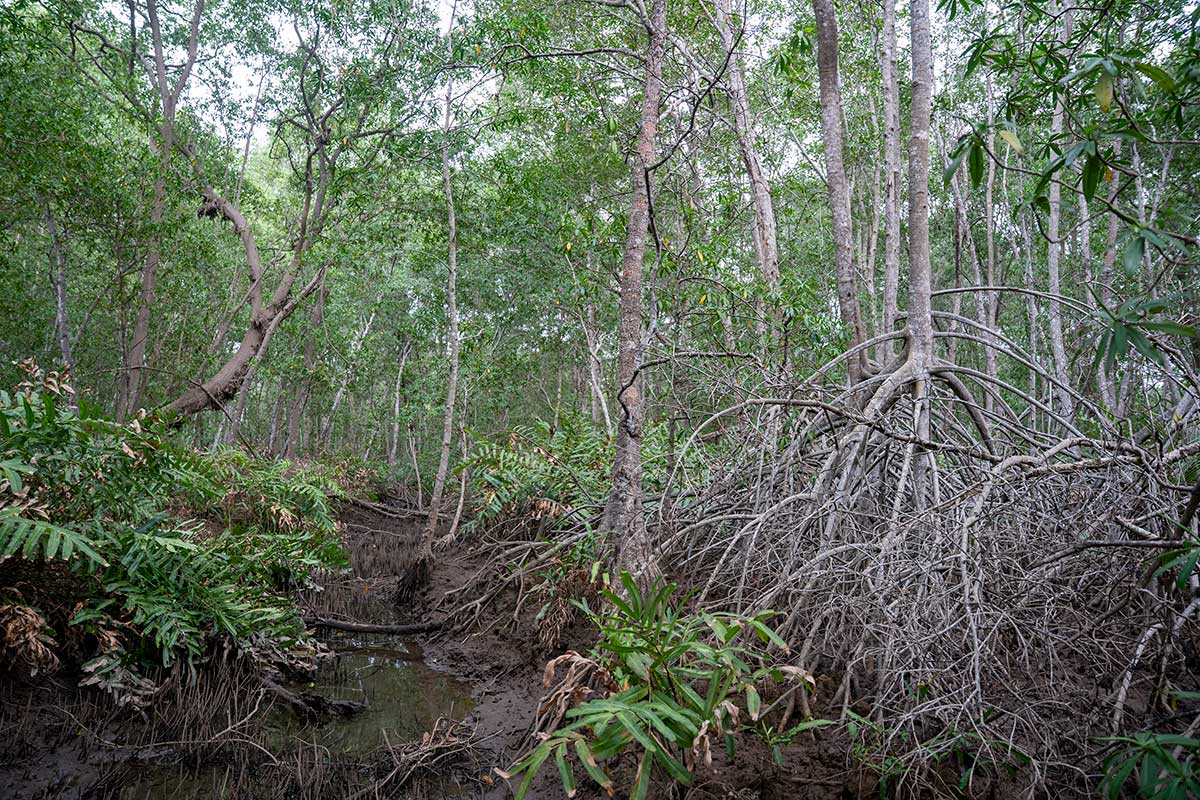
The Estero de Puntarenas Wetland is a protected wildlife area in the district of Pitahaya, where El Establo is located. With a current area of 12,951 acres (the equivalent of 7,340 FIFA-sized soccer fields), 61% of its surface is covered by species such as red mangrove (Rhizophora mangle), white mangrove (Laguncularia racemosa), buttonwood (Conocarpus erectus), and piñuela (Pelliciera rhizophorae), among others.
For 80 years, this ecosystem was exposed to sedimentation, agricultural expansion, pollution and fires, resulting in a historical loss of 2,139 acres, which represents approximately 76% of the original cover in that sector.
During the drafting of the management plan in 2018, the National System of Conservation Areas (SINAC) identified the urgent need to restore the ecosystem and requested assistance from the Tropical Agricultural Research and Higher Education Center and Conservation International.
They opted for hydrological restoration, so 14.7 miles of channels had to be dug to return tidal flow to degraded zones. “In other words, we needed people swinging shovels,” says Jairo Quirós, Marine Program coordinator for Conservation International.
That was how, in 2021 and 2022, a crew of 20 people from El Establo, led by López, cleared a path for water. “In our sector, we went more than 1,312 feet inward with nothing but shovels. Each person was assigned a ten-foot section to work on,” the foreman recalls.
Quirós admits that the experience of working with the community members was enriching, as they contributed valuable techniques and a deep empirical knowledge to control the entry of water during the excavation.
“Many of them work on sugarcane farms as part of the irrigation crews,” Quirós mentions. “They were very good at suggesting how to manage water direction. They worked in sections: they would dig a channel but leave a temporary plug to ensure water wouldn't seep through and block the incoming flow. Once they finished that sector, they would clear the path, allowing that section to fill with water. All of their suggestions were spot on.”
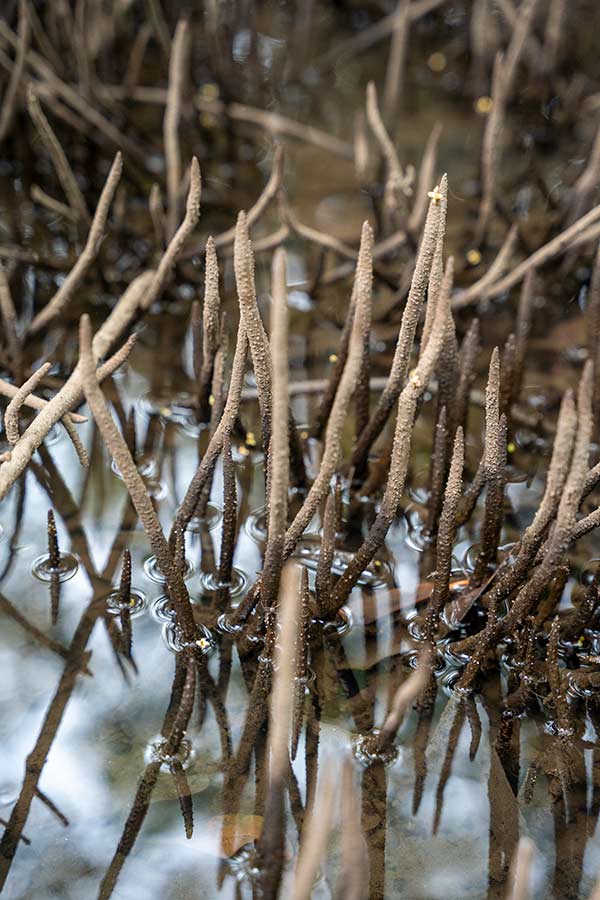
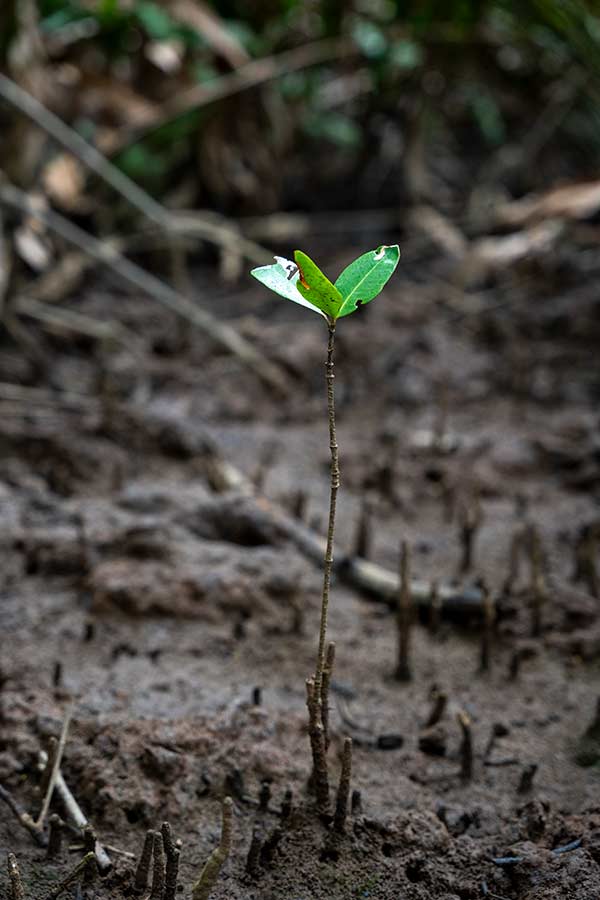
A few months after the work was completed, white mangrove and buttonwood seedlings were already visible. “They would arrive and plant themselves,” Quirós comments. “The mangrove is extremely grateful. You restore the ideal conditions and it immediately recovers.”
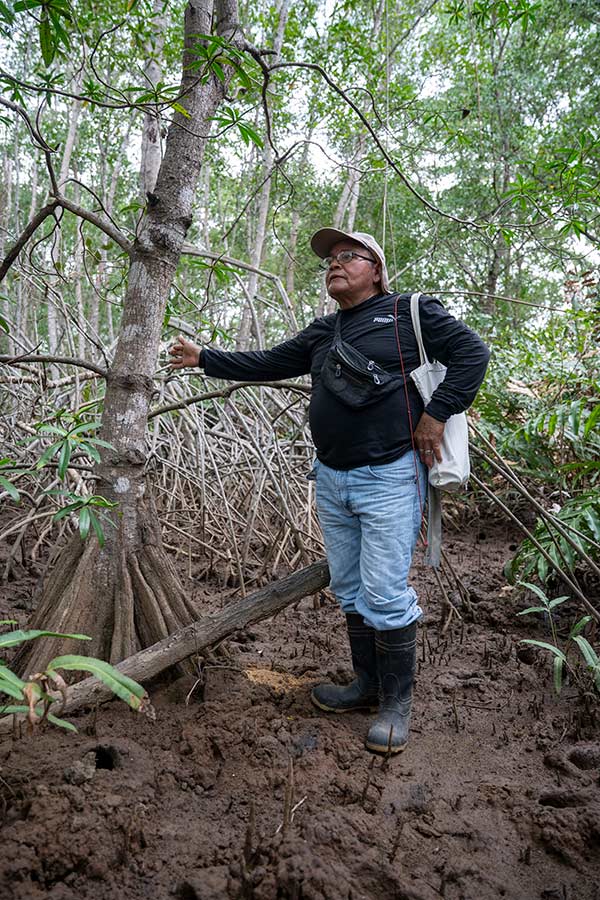
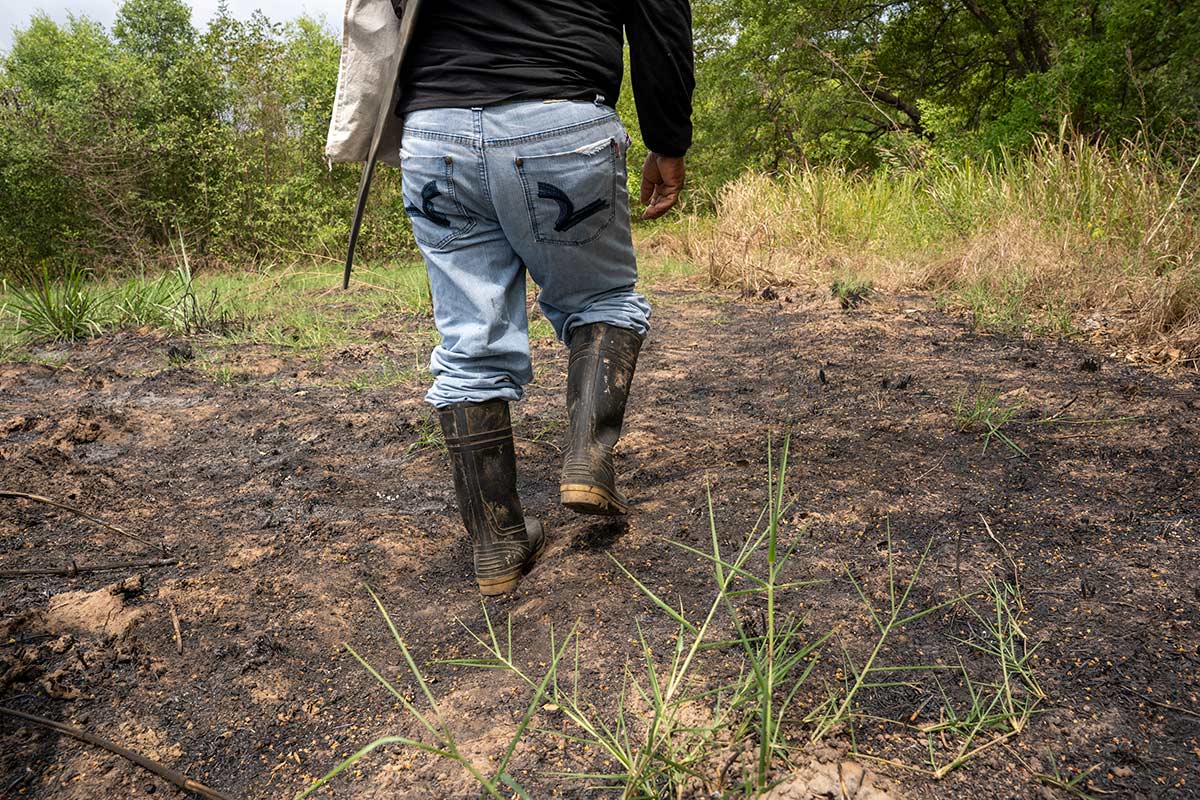
On Sunday, May 3, 2026, López returned to the restored sector for the first time in nine months and his walk brought him face to face with a heartbreaking reality. On the grayish ground, the black remnants of an arson fire were still smoking. “It’s a shame to see how people's recklessness sets fire to what cost us so much to recover,” he lamented.
According to data from SINAC, nearly 42% of Costa Rica's wildfires are caused by vandalism and arson, either as revenge against park rangers or to distract them while committing other crimes.
For Quirós, arson fires are an ever-present threat. Like other protected areas, the Estero de Puntarenas Wetland suffers from institutional neglect due to severe staff shortages. "If the site has survived, it is thanks to the dedication of local leaders and the staff at the El Palmar sugar mill," Quirós acknowledges.
Productive activities surrounding the mangrove, such as honey production or educational tourism, are ways to protect the ecosystem. The more it is used sustainably and the greater the community's presence, the less vulnerable it becomes to arson fires.
"There is enormous potential for tourism," Quirós says. "Unlike other mangroves where walking is a struggle because of the mud, access here is extremely easy. We have taken people by boat when the overland route washes out due to heavy rains and we believe that birdwatching is a viable economic alternative for the community."
The other challenge lies within ApiMangle itself. With only 20 hives, current production is limited to a micro-lot (about 440 pounds annually), and transportation to urban centers doubles the final price of the product.
The strategy they have settled on is competing on added value and not on price. To do this, they are seeking alliances in tourist stops in Puntarenas and ecotourism ventures like the Posada Rural Amistad on Chira Island. But time is running out. They must establish the alliances before international funds expire at the end of 2026.
BEEKEEPING
López steps into the vegetation, heading away from the river. About 160 feet in, he stops to point out one of the ditches. He recognizes it because he was here, working, a few years ago. Now, only mangrove trees are visible.
In El Establo, honey serves as an incentive for conservation and the community cares deeply about the health of the ecosystem that sustains their economic activity. The honey comes from a protected area and that gives the product an added value.
From a biocultural heritage perspective, honey is the witness to a tradition of harvesting and production that is closely linked to the natural environment. Its nutritional and medicinal properties have been known since pre-Columbian times, when the Chorotegas—an Indigenous people who inhabited Costa Rica—traded with it.
In times of climate change, the regulating ecosystem services provided by mangroves become increasingly important, as does their capacity to fix carbon in their mud, roots, trunks and leaves.
López speaks about all of this and then he falls silent, his gaze revealing the swirling swarm of thoughts in his mind. He knows perfectly well what it cost to clear every foot of mud to make space for the tide. He also recognizes that the mangrove rewards that effort with nectar, and the bees do the same with honey. He is aware of the threat that arson fires represent and that worries him. He knows that this is where the path to resilience lies.
After a heavy sigh, he says, “Without the mangrove, we are doomed.”
Location: Aldea Las Mañanitas, Santa Rosa, Guatemala
A community initiative born of the implementation of the IUCN Regional Coastal Biodiversity Project.
Location: Barra de Santiago, El Salvador
A beekeeping project established with the support of the Salvadoran government and organizations like the IUCN. The end of institutional funding also meant the end of several community initiatives. Only El Mango remains active.
Facebook:
Established through technical training and support from MARFund, this initiative provides sustainable development alternatives for fishers and community members in Roatán in the Honduran Caribbean. Today, alongside fishing, the village's inhabitants rely on beekeeping to generate additional income.
For 26 years, the women of Parita have volunteered to restore and prevent the degradation of their local mangrove ecosystem. In early 2026, they launched mangrove honey production as a sustainable development alternative to protect the mangrove ecosystem.